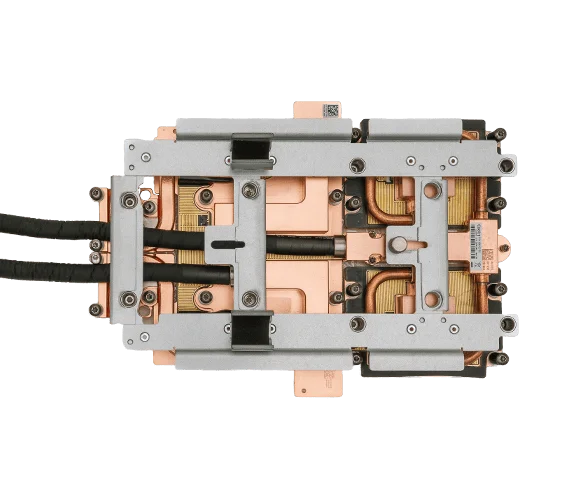
As electronic systems continue to increase in power density, traditional air-based cooling methods are often insufficient. This shift has led to the rapid adoption of advanced thermal management solutions, particularly coldplate loops designed for precision cooling environments. Unlike conventional methods, a liquid cooling loop integrated with coldplates enables efficient heat transfer through a controlled fluid medium, reducing thermal resistance and improving system reliability. In industries where performance stability is critical, engineers are increasingly turning toward custom coldplate loops to meet specific design and operational requirements.
Table of Contents
- Why Engineers Prefer Custom Coldplate Loops?
- How Custom Coldplate Loops Work
- Importance of Material Selection and Copper Cold Plate Design
- Role of Custom Cold Plate Design Services in Engineering Projects
- Applications of Coldplate-Based Cooling Systems
- Engineering Challenges Solved by Custom Coldplate Loops
- Future Trends in Precision Cooling Systems
- Conclusion
- Frequently Asked Questions
- What makes custom coldplate loops more effective than traditional cooling methods?
- How does a liquid cooling loop improve system performance?
- Why is copper commonly used in coldplate designs?
- What industries benefit most from coldplate loop assemblies?
- How do custom cold plate design services support engineering projects?
- Frequently Asked Questions
Why Engineers Prefer Custom Coldplate Loops?
Thermal Efficiency Gains
One of the primary reasons engineers choose custom coldplate loops is improved thermal efficiency. By directly attaching cold plates to heat-generating components, heat transfer becomes more targeted and effective. A well-designed coldplate loop assembly reduces thermal bottlenecks and allows uniform heat distribution across the system. This is especially important in applications where temperature variation can affect performance or cause premature component failure.
Design Flexibility for Complex Systems
Modern electronic systems are rarely uniform in shape or layout. Standard cooling solutions often struggle to adapt to irregular configurations. This is where custom cold plate design services become essential. Engineers can tailor dimensions, flow paths, and material selection to match system requirements. This flexibility allows better integration into compact assemblies while maintaining optimal cooling performance.
Improved Operational Reliability
Reliability is a key factor in thermal system design. By using coldplate loops, engineers can ensure consistent thermal performance even in fluctuating operating conditions. Compared to passive cooling, active liquid-based systems provide better control over temperature spikes. This reduces stress on components and extends system lifespan, making them ideal for high-performance computing, power electronics, and advanced automation systems.

How Custom Coldplate Loops Work
Coldplate Loop Assembly Explained
The efficiency of this process depends heavily on design precision. Even minor improvements in channel geometry or material selection can significantly enhance thermal performance. A coldplate loop assembly typically consists of a precision-machined coldplate, fluid channels, pumps, and heat exchangers. The coldplate absorbs heat from electronic components, while the circulating fluid carries that heat away to a remote cooling unit.
Integration with Liquid Cooling Loop Systems
A properly engineered liquid cooling loop ensures continuous heat transfer without significant thermal lag. Fluid is circulated through a closed loop, absorbing heat from the cold plate and releasing it through a heat exchanger. This closed-loop system minimizes contamination risks and maintains stable thermal conditions over long operational cycles. It is especially valuable in systems requiring continuous uptime.
Importance of Material Selection and Copper Cold Plate Design
Material selection plays a critical role in determining the overall thermal efficiency, durability, and performance of liquid cooling systems. Among the materials used in thermal management, copper remains one of the most widely preferred choices for cold plate design due to its exceptional thermal conductivity and ability to rapidly transfer heat away from high-power components.
In many high-performance applications, engineers carefully evaluate multiple factors before selecting the data center material, including thermal conductivity, weight constraints, corrosion resistance, manufacturability, and overall system cost. While copper offers superior heat transfer capabilities, aluminum and hybrid material structures are sometimes used in designs where weight reduction or cost optimization is a priority.
Role of Custom Cold Plate Design Services in Engineering Projects
Modern engineering projects often require highly specialized cooling solutions. This is where custom cold plate design services become critical. These services allow engineers to collaborate on thermal simulations, prototype testing, and iterative design improvements. By customizing flow patterns and thermal interfaces, engineers can fine-tune cooling performance before final production.
Companies like CoolIT Systems have contributed significantly to advancing liquid cooling technologies, supporting the development of efficient and scalable thermal solutions for complex systems.
Applications of Coldplate-Based Cooling Systems
Custom thermal solutions, especially coldplate-based cooling systems, are widely adopted across multiple industries where efficient heat management is critical to performance, reliability, and system longevity.
- High-performance computing systems
- Power conversion and energy systems
- Advanced telecommunications infrastructure
- Industrial automation equipment
- AI-driven hardware systems
Across all these industries, coldplate loops provide a reliable, highly efficient method for managing high heat loads. Their ability to provide direct-to-component cooling makes them especially valuable in environments where space, efficiency, and performance are critical.
Engineering Challenges Solved by Custom Coldplate Loops
By integrating a liquid cooling loop, engineers can maintain precise temperature control even in demanding operational environments. Traditional cooling methods often face limitations such as uneven heat distribution, limited scalability, and inefficient thermal transfer. Custom coldplate loops address these challenges by offering:
- Targeted heat removal from specific components
- Scalable design adaptability for complex systems
- Reduced thermal resistance through direct contact cooling
- Enhanced system stability under variable loads
Future Trends in Precision Cooling Systems
The demand for higher computing power and compact electronics continues to grow, pushing thermal management systems to evolve rapidly. Future developments in coldplate loops are expected to focus on:
- Miniaturized designs for compact systems
- Improved fluid dynamics modelling
- Advanced materials for higher conductivity
- Smarter thermal monitoring integration
These innovations will continue to enhance performance while reducing energy consumption and system footprint.
Conclusion
The shift toward high-density electronics has made precision thermal management a critical engineering priority. Custom coldplate loops offer a highly efficient, flexible, and reliable solution for managing heat in advanced systems. By combining innovative design approaches, optimized coldplate loop assembly, and precise engineering techniques such as copper cold plate design, industries can achieve superior thermal performance. For organizations looking to enhance system reliability and efficiency, consulting provides valuable direction in selecting the right cooling strategy for long-term success.

Frequently Asked Questions
What makes custom coldplate loops more effective than traditional cooling methods?
Custom designs allow direct heat removal from critical components, improving efficiency compared to air-based systems. The integration of a liquid cooling loop ensures better temperature stability and control.
How does a liquid cooling loop improve system performance?
A liquid cooling loop transfers heat more efficiently than air by using a circulating fluid. This reduces thermal resistance and maintains consistent operating temperatures even under heavy loads.
Why is copper commonly used in coldplate designs?
Copper offers excellent thermal conductivity, making it ideal for fast and efficient heat transfer. A well-optimized copper cold plate design helps maintain stable system performance under demanding conditions.
What industries benefit most from coldplate loop assemblies?
Industries in Calgary, such as computing, telecommunications, energy systems, and industrial automation, benefit greatly due to their high heat generation and need for reliable thermal control.
How do custom cold plate design services support engineering projects?
These services help engineers develop tailored thermal solutions through simulation, prototyping, and optimization, ensuring the cooling system meets exact performance requirements.